
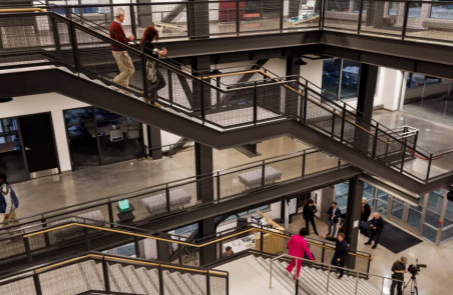
If an ambitious redevelopment plan takes hold, investment totaling hundreds of millions of dollars could soon pour into Kenosha, potentially transforming its economy and skyline five years after the police shooting of Jacob Blake attracted worldwide attention to the small lakefront city in Wisconsin.
The city replaced a damaged strip mall with an affordably priced apartment complex soon after the 2020 civil unrest that followed the Blake shooting. But that was just one step in a decadeslong effort to revitalize what had been a Rust Belt city hit by factory shutdowns.
Kenosha has breathed new life into once-empty manufacturing sites, recently breaking ground on high-end residential developments near the city’s harbor, part of a new, walkable downtown meant to attract thousands of residents. A high-tech hub for small manufacturers, other local businesses and entrepreneurs has also begun rising just west of downtown.
“We’ve reinvented ourselves a number of times,” said John Antaramian, who recently retired after serving as mayor for nearly 25 years. “We need more density downtown if Kenosha is to grow and thrive.”
But the city’s latest reinvention still worries some residents. It’s tough now to afford housing and food, they said. And although the development blueprints look great, hundreds of new, expensive apartments and amenities could remake downtown into a place for the tourists and the affluent, pricing out struggling Kenoshans and leaving behind those who suffered most from the civil unrest.
Read more in the Chicago Tribune.