
A collaborative ecosystem with an emphasis on reinvention is driving Wisconsin’s growth in the industry.
Long associated with dairy, Wisconsin has transformed cheese into both a cultural hallmark and an industry of unmatched scale. By its production numbers alone, the state often referred to as “America’s dairyland” significantly outpaces other states. Not only does Wisconsin produce 24% of the country’s domestic cheese production, but it is also responsible for producing more than 50% of the feta, parmesan, and several other varieties of cheese made in the U.S.
But cheese is only part of the story. Wisconsin’s broader food and beverage (F&B) sector is thriving, with growth rippling across everything from processing and packaging to compliance and research and development (R&D).
A long-standing heritage of innovation and manufacturing runs through Wisconsin’s economy, sustaining industries such as F&B. That foundation has attracted seven of the world’s 10 largest food companies, which are bolstered by a state government that promotes cross-sector partnership and sustained investment in research.
A thriving industry hub
Wisconsin offers a unique blend of advantages as a business base, especially for F&B companies. More than 3,800 F&B businesses operate in the state, including several major brands, such as Nestlé, Sargento, and Kraft Heinz, all of which have established significant operations
in Wisconsin.
In Jefferson County, a hub of F&B-related manufacturing has cropped up in recent years, reflecting major infrastructure developments in the area. Nestlé Purina poured $195 million into expanding its existing facility in the county while international grain processor Aztalan Bio invested more than $450 million to convert a former ethanol factory in the area for its
own production.
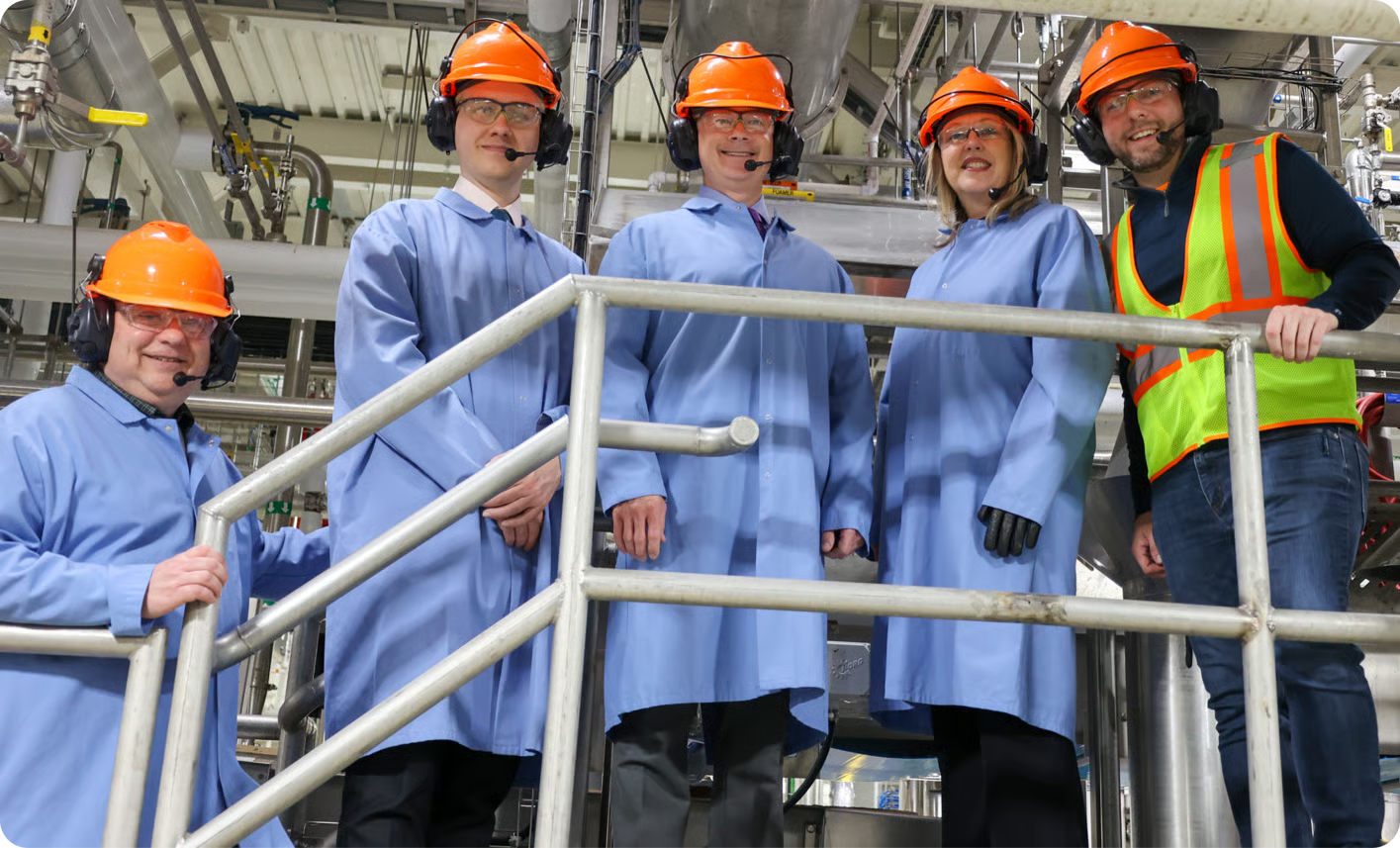
Advanced production lines enable Wisconsin manufacturers to maintain quality, safety, and efficiency at scale.
“The main benefit businesses get from Wisconsin is stability,” says John W. Miller, secretary and CEO of Wisconsin Economic Development Corporation (WEDC), which acts as a liaison among Wisconsin’s businesses, research entities, and support resources available in the state. “Stability in a workforce, stability in tax policy that isn’t apt to change very regularly, and relative stability in weather make it a wonderful place to start a business.”
Read more at fortune.com.